
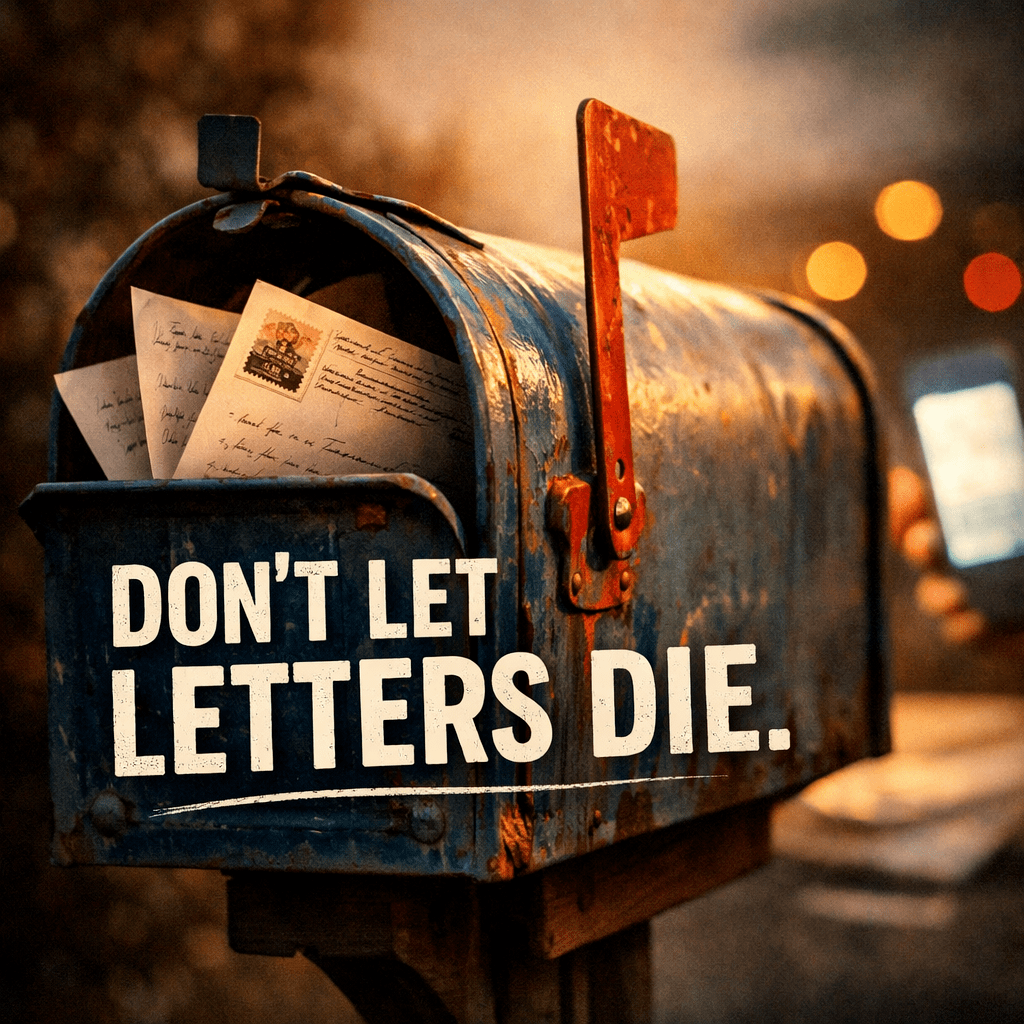
Snail mail is becoming rare. When was the last time you sat down, chose a card or a sheet of paper, wrote a message by hand, sealed it, and sent it off with a stamp?
In America, we should be thankful we can still do that. We still have neighborhood mailboxes, post offices, carriers who show up in heat and snow, and a system built to reach every address, not just the profitable ones. But we’re slowly losing the habit.
Denmark is a sobering example. PostNord announced it would stop collecting and delivering letters in Denmark after December 30, 2025, after a long decline in letter volume as the country moved heavily toward digital communication. (group.postnord.com)
So here’s the uncomfortable question: Could that happen in America? Not overnight. Not easily. But if we stop using something long enough, we shouldn’t be shocked when it disappears.
Why the mail system still matters
A real postal system is more than a convenience. It’s part of a nation’s backbone.
It’s one of the few services designed to be universal: city, suburb, small town, farmland, mountain road. When the system is healthy, nobody gets left out simply because their ZIP code isn’t profitable. That kind of promise is rare.
And it’s not just nostalgia. The U.S. Postal Service still moves an enormous amount of mail and packages every year. (Postal Facts – U.S. Postal Service) Even in a digital world, the mail remains a quiet river running beneath everyday life.
What snail mail does that modern technology can’t
Technology is fast. But speed isn’t the same as meaning.
1) It proves you mattered enough to slow down.
A text is easy. A letter costs time, intention, and a little effort. That effort communicates love before the person even reads the first line.
2) It becomes a keepsake, not a notification.
A letter can be saved in a drawer for 20 years. It can be held after someone is gone. A message with a postmark can become a family artifact.
3) It feels human in a way screens don’t.
Handwriting carries emotion. The pressure of the pen. The slant. The little cross-outs. The authenticity. It’s you, not an autocorrected version of you.
4) It’s resilient when the digital world isn’t.
Passwords fail. Accounts get locked. Platforms change. Links break. But a letter doesn’t require Wi-Fi, a subscription, or an update.
5) It carries a unique kind of “weight.”
A serious apology in a letter lands differently. A thank-you letter changes a person’s week. A blessing written and mailed can be re-read on hard days.
What’s happening right now: ads and boxes
Let’s be honest: a lot of what arrives in the mailbox today is not personal. Advertising mail (Marketing Mail) has become a major share of the “market dominant” mail mix in recent years. (21st Century Postal Worker) And e-commerce has helped make packages a central part of modern delivery. (USPS Employee News)
That shift creates a dangerous perception:
“If the mailbox is mostly coupons and clutter, why keep it?”
Because if the mailbox becomes “only ads,” the public will treat it like junk, and then the political and financial support for a universal service grows weaker. And once a nation loses the habit of letters, it becomes easier to lose the infrastructure that makes letters possible.
The USPS Office of Inspector General has even projected continued decline in total mail volume over the next decade if trends continue. (USPS OIG Stories) That doesn’t mean the system is doomed. It means we have a choice: let the mailbox become a landfill, or revive it as a lifeline.
Why the federal post office should be kept
Because a nation needs at least one delivery network that serves people, not just profits.
A strong postal service supports:
Community and connection (especially for seniors and rural communities) Small businesses that rely on affordable shipping options National reliability with standards, accountability, and broad reach Civic life (the boring-but-crucial stuff a society runs on)
When a postal system weakens, the first people to feel it are often the ones with the least flexibility: the elderly, the disabled, the rural, the poor, and those who aren’t fully digital. Denmark’s shift raised those very concerns about access and inclusivity. (AP News)
Why we must not abandon personal letters
Because we are losing something precious: the practice of being deliberately present.
A letter forces you to:
gather your thoughts choose your words carefully speak with dignity give someone undivided attention
That discipline shapes the sender as much as it blesses the receiver.
And let me say this plainly: a society that can’t slow down long enough to write to one another is a society at risk of forgetting how to love well. We may be more connected than ever, but we are also more distracted than ever.
A revived snail mail culture would be a quiet rebellion against shallow communication.
Occasions where snail mail is still powerful (and should be used more)
Wedding invitations and save-the-dates Graduation announcements Baby announcements and dedications Thank-you letters (after dinners, gifts, interviews, kindnesses) Sympathy and condolence letters Apology letters (the kind that actually mean something) Encouragement letters to someone depressed, grieving, or recovering Letters to parents, grandparents, and mentors Love letters (yes, real ones) Birthday cards with a handwritten page included Faith notes: a Scripture promise, a blessing, a prayer written out Notes to teachers, coaches, nurses, pastors, and caregivers “Just because” letters: no occasion needed, only affection
A simple challenge: revive the mailbox
I’m asking you to do something old-school and beautiful.
This week:
Write one letter by hand. Say something you would never cram into a text. Mail it with a stamp. Do it again next week.
If enough of us do this, we won’t just keep a tradition alive. We’ll keep a human art alive: thoughtful communication, made physical.
Let’s stop treating the mailbox like it’s only for advertisements and online shopping. Let’s reclaim it as a place where love, honor, gratitude, comfort, and blessing can arrive—quietly, faithfully, and personally.
Because some messages deserve more than a screen. They deserve a postmark.
Gil Valenzuela
 myJOURNEY